2 products
Admixtures
admixtures

Admixtures, PVA Bonding and SBR Bonding for Trade and DIY
A weak bond between layers is one of the most common causes of render failure. Poor adhesion leads to cracking, peeling, and costly repairs later on. Our admixtures range gives you the right bonding agent for every job. It includes PVA bonding, SBR bonding, cement admixtures, and liquid bonding agents. Suitable for plastering, rendering, screeding, tiling, and concrete repair. Trusted brands. Trade-ready pack sizes. Delivered across the UK.
What Are Admixtures and Why Do They Matter?
Admixtures are products added to cement, mortar, or concrete mixes. They change how the mix performs. Some improve adhesion. Others add flexibility or water resistance.
In construction, a new layer must bond strongly to the old surface. Without a bonding agent, cement and plaster can fail to grip. The result is cracking, delamination, or complete loss of the layer.
PVA bonding agents and SBR bonding agents are the two most widely used types in the UK. PVA works well on dry internal surfaces. SBR is the better option for damp or external areas. Knowing which one to use prevents problems from the start.
Key tip: Never apply PVA bonding to surfaces exposed to moisture. PVA re-emulsifies when wet. This weakens the bond. For external or damp conditions, always use SBR bonding agent instead.
Types of Admixtures and Bonding Agents
Each admixture type serves a different purpose. Here is a clear guide to what is available and when to use each.
PVA Bonding Agent
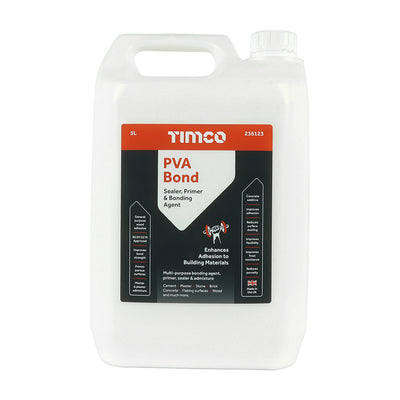
PVA bonding agent is a multipurpose primer, sealer, and cement admixture. It primes unsound surfaces before plastering or painting. It also works as an adhesive on wood, cork, and porous materials. PVA bonding is ideal for internal, dry applications. It is not suitable for areas exposed to moisture or water. It conforms to BS 5270.
SBR Bonding Agent
SBR bonding agent is a latex-based polymer admixture. It improves adhesion, flexibility, and water resistance in cement mixes. It is specifically designed for damp, humid, and external environments. Unlike PVA, SBR does not re-emulsify in wet conditions. It is suitable for renders, screeds, concrete repair, and tanking systems.
Cement Admixtures
Liquid cement admixtures are mixed directly into the batch. They modify workability, strength, and durability. Polymer-modified mixes resist shrinkage and cracking better. They are widely used in floor screeds, repair mortars, and poured concrete. The right admixture can significantly extend the life of a repair.
Bonding Slurry Coat
A bonding slurry is a mix of cement and bonding agent. It is brushed onto the substrate before applying a new layer. Apply the fresh mortar or render while the slurry is still tacky. Do not let it dry before applying the next layer. This is a key step when bonding new concrete to old concrete.
Plasterers Grip Coat
Grip coat is a specialist bonding agent for plaster on difficult substrates. It creates a mechanical key on smooth surfaces like concrete and block. This gives plaster something to grip onto. It prevents the plaster from sliding or delaminating. Ideal for use on painted walls and dense concrete before re-skimming.
Render and Screed Additive
Polymer additives for render and screed go into the mix water. They increase the mix's bond to the substrate. They also reduce surface dusting and improve resistance to salts. SBR-based additives are common for external renders. They allow thinner screed sections without losing strength.
PVA Bonding vs SBR Bonding: Key Differences
PVA and SBR are both bonding agents. They do not do the same job. Using the wrong one for the conditions is a common mistake on site.
| Feature | PVA Bonding Agent | SBR Bonding Agent |
|---|---|---|
| Base material | Polyvinyl acetate (PVA) | Styrene butadiene rubber (SBR) |
| Water resistance | Low. Re-emulsifies when wet | High. Stable in damp conditions |
| Best use | Internal, dry surfaces | External, damp, or wet areas |
| Common applications | Plastering, priming, dust sealing | Renders, screeds, tanking, concrete repair |
| Use as admixture | Yes, in dry conditions | Yes, in all conditions |
| Flexibility | Moderate | High. Reduces cracking and shrinkage |
For most external UK projects, SBR is the more reliable option. The UK climate brings dampness and freeze-thaw cycles. SBR resists these conditions better than PVA.
How to Use Bonding Agents Correctly
Applying a bonding agent is straightforward. But technique matters. Follow these steps for a reliable result every time.
Surface Preparation
Clean the surface before applying any bonding agent. Remove dust, loose material, grease, and oil. The substrate must be sound. Any loose areas must be cut back. A contaminated surface will prevent the bonding agent from working.
Dilution and Application
Mix the bonding agent with water at the ratio stated on the label. For SBR primer, a typical ratio is 1 part SBR to 5 parts water. Apply evenly with a brush or roller. Full coverage is essential. Missed areas will fail to bond.
Apply While Tacky
Apply the render, plaster, or mortar while the primer coat is still tacky. If the primer dries fully, apply a fresh coat before continuing. A dried, un-tacky primer will not bond the new layer properly. This is a step many jobs get wrong.
Using as an Admixture
To use SBR or PVA as a cement admixture, add it to the mix water first. Stir it in before adding the dry materials. A typical mix is 1 part cement to 4 parts sand with 5 to 10% polymer. Check the product data sheet for exact quantities.
Important: Do not mix SBR with lime-based products. SBR is also not compatible with certain specialist admixtures. Always read the technical data sheet before combining products.
Where Admixtures Are Used in Construction
Bonding agents and admixtures have many applications across building and repair work. Here are the most common uses on UK construction sites and in DIY projects.
Concrete Repair
Old concrete loses its ability to bond with fresh repair mixes. An SBR bonding slurry applied to the repair area restores that bond. It also enhances resistance to carbonation. This helps protect embedded steel from corrosion.
External Rendering
External render is exposed to wind, rain, and frost. Adding SBR bonding agent to the render mix increases flexibility. This reduces cracking caused by thermal movement. It also improves adhesion to difficult substrates like dense block.
Floor Screeds
SBR improves the bond between a floor screed and the concrete slab. It also allows thinner sections to be laid without loss of strength. This is useful for renovation projects where floor height is limited. It reduces surface dusting in finished screeds.
Plastering and Skimming
PVA bonding agent primes smooth or porous surfaces before plastering. It reduces suction on very absorbent backgrounds like new blockwork. Without it, the plaster can dry out too fast and fail to set properly. Grip coat is better for very smooth or non-porous surfaces.
Tanking and Damp-Proofing
SBR is used as a primer before applying tanking slurry. It prepares basement walls and floors for waterproofing systems. The primer improves adhesion of the tanking layers to the substrate. It is an integral part of many tanking specifications in the UK.
Tiling Preparation
SBR can be used as a primer before tiling on dense or dusty substrates. It improves the bond between the tile adhesive and the background. It can also be used as a flexibiliser in tile adhesive mixes. This is useful on floors subject to movement or vibration.
Get the Right Admixture for Your Project
Use the filters above to narrow by product type, application, and pack size. Always read the product data sheet before use. It confirms dilution rates, coverage, and substrate compatibility.
Whether you need PVA bonding for internal plastering, SBR bonding for external render, or a cement admixture for concrete repair, this range covers the most-used products for trade and DIY work across the UK. See our building chemicals range for more related products.
Frequently Asked Questions
What is the difference between PVA bonding and SBR bonding?
PVA bonding is for dry, internal surfaces. It re-emulsifies when exposed to moisture. SBR bonding is latex-based and stays stable in damp or wet conditions. Use SBR for external applications and PVA for internal, dry areas only.
Can I use SBR bonding agent as an admixture in mortar?
Yes. Add SBR to the mix water before combining with dry materials. It improves adhesion, flexibility, and water resistance of the mortar. Check the product data sheet for the correct dosage rate.
Do I need to dilute SBR bonding agent before applying?
Yes, for most applications. A common primer dilution is 1 part SBR to 5 parts water. For a bonding slurry, mix undiluted SBR with cement. Always follow the ratios stated on the product label.
Can I apply render directly after using a bonding agent?
Apply the render while the bonding agent is still tacky, not fully dry. If the primer dries out before you start, brush on a fresh coat. Applying onto a fully dried primer significantly reduces adhesion.
Is SBR bonding agent suitable for tanking systems?
Yes. SBR is commonly used as a primer coat before applying tanking slurry. It improves the bond of the waterproofing layers to the substrate. It is an accepted part of many UK tanking specifications for basements and wet rooms.
What surfaces can PVA bonding agent be used on?
PVA is suitable for brick, block, concrete, plaster, wood, cork, and textiles. It works as a primer, sealer, and dust treatment on most dry, porous surfaces. It is not suitable for permanently wet or external surfaces.
How long does SBR bonding agent last once opened?
Store in a cool, dry location out of direct sunlight. Keep the container sealed when not in use. Check the best-before date on the packaging. Protect from frost during storage.
Related Building Products
Admixtures are often used alongside other building chemicals. See our building chemicals range for waterproofing, sealers, and surface treatments.