11 products
Clamping Tools
clamping-tools
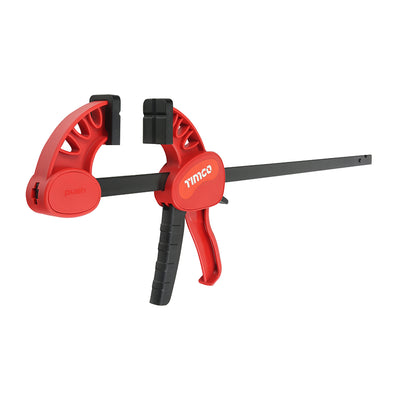
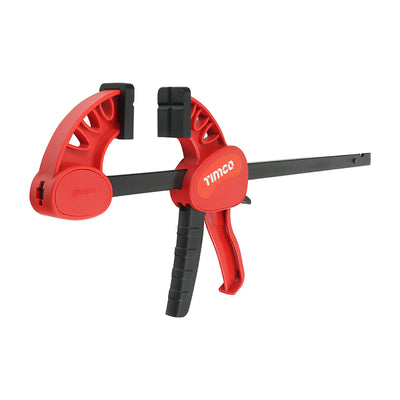
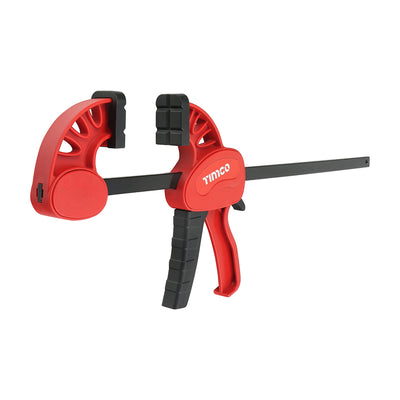
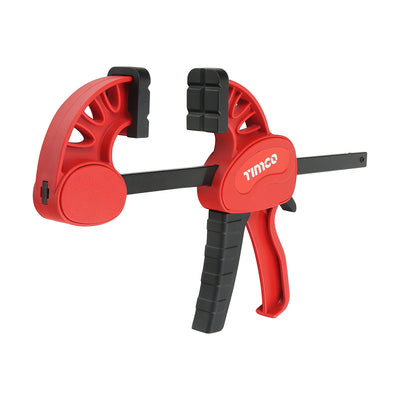
Clamping Tools for Trade, Workshop and Site Work
A poor clamp lets your workpiece move. That ruins cuts, joints, and glue-ups. It can also be dangerous. Good clamping tools hold material firmly and safely. Here you will find metal clamping tools, heavy duty clamps, and spring clamps for every job. Products are suited to woodworking, metalworking, fabrication, and general trade use. Whether you need one clamp or a full kit, you will find the right tool here.
Why Good Clamping Tools Matter
Clamping is often overlooked. But it is one of the most important parts of any job. A workpiece that moves during cutting is a safety hazard. A joint that shifts during gluing will fail under load.
The best heavy duty clamps give you solid, reliable holding force. They free up your hands so you can focus on the work. They also reduce the risk of accidents on site and in the workshop.
This range covers metal clamping tools in several styles. You will find options for light and heavy tasks alike. All products are suited to UK trade, DIY, and workshop use.
Quick tip: Always match your clamp type to the job. Heavy duty clamps suit structural and fabrication work. Spring clamps are ideal for quick, light-pressure tasks. Using the right clamp type gets you a better result every time.
Types of Clamping Tools in This Range
Not all clamps work the same way. Each type suits different materials and tasks. Here is a clear guide to the main types available.
Spring Clamps
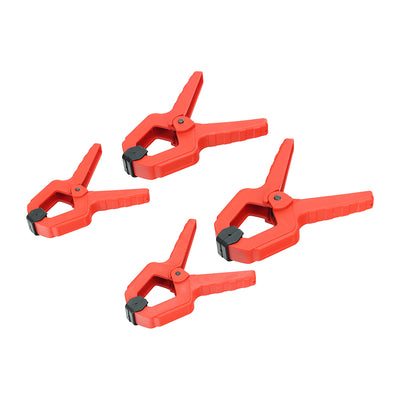
Spring clamps work like oversized pegs. You squeeze the handles to open the jaws. Release and the spring holds the workpiece. They are fast and easy to use one-handed. The best spring clamps have rubber-tipped jaws. This protects finished surfaces from marks. Ideal for holding glued panels, templates, and light assemblies in place.
Heavy Duty G-Clamps
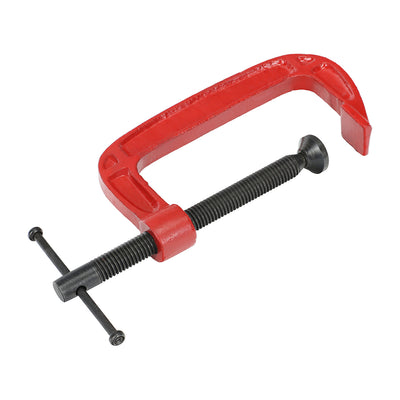
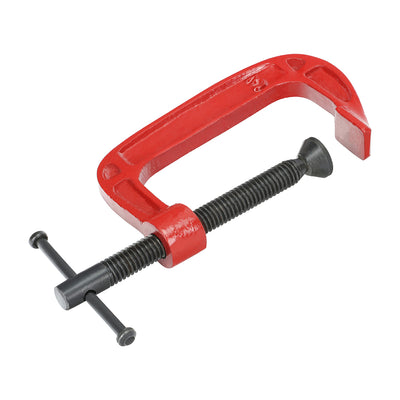
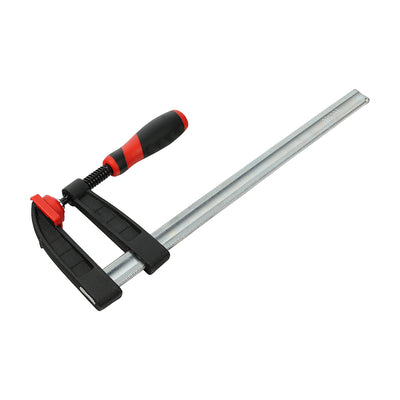
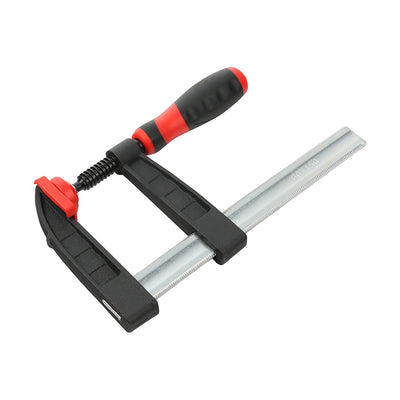
G-clamps are among the most common metal clamping tools. The frame is shaped like a letter G. A threaded rod drives a swivel shoe into the workpiece. They apply very high clamping force. Best heavy duty G-clamps are forged steel for strength and durability. Use them for welding, metalwork, joinery, and securing jigs to workbenches.
F-Clamps (Bar Clamps)
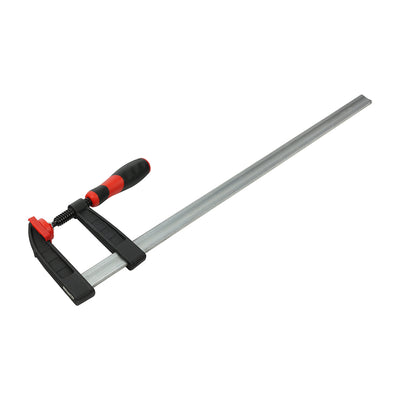
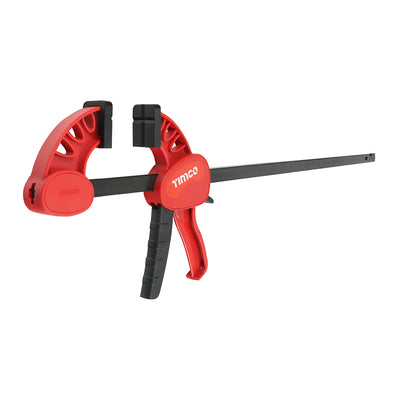
F-clamps have a long steel bar with a sliding jaw. The sliding jaw moves freely along the bar. A second fixed jaw sits at the other end. A threaded handle locks the work in place. F-clamps suit wider workpieces than G-clamps. They are popular in woodworking and cabinet making. Good for holding large panels, door frames, and wide boards during gluing. Specific options include 18" Quick Change Bar Clamp, 12" Quick Change Bar Clamp, 12 "Mini Quick Change Bar Clamp, 6" Mini Quick Change Bar Clamp.
Sash Clamps
Sash clamps have a long steel bar and two adjustable jaws. They are designed for large work. Commonly used to pull together door frames, window sashes, and cabinet carcasses. They spread clamping force evenly across a wide span. This prevents bowing and distortion. A staple in any serious woodworking or joinery workshop.
Pipe Clamps
Pipe clamps use standard steel pipe as the bar. You supply the pipe; the fittings attach to it. This lets you create very long clamps for large frames and panels. They are a cost-effective solution for large glue-ups in woodworking. Pipe clamps apply strong, even pressure across long spans.
Toggle Clamps
Toggle clamps lock in position with a lever action. One push locks; one pull releases. They are used on jigs, fixtures, and CNC routing tables. Very fast in repeat production work. Available in horizontal, vertical, and push-pull styles. Suited to metalworking and woodworking alike.
Welding Clamps and Magnetic Clamps
Welding clamps hold metal pieces at precise angles during tacking and welding. Magnetic clamps use strong magnets to hold metal at 45, 90, or 135 degrees. Both types leave hands free during welding. Essential metal clamping tools for fabrication work. They withstand heat and weld spatter better than standard clamps.
Locking Pliers and Mole Grips
Locking pliers grip and stay locked without effort. Turn the adjustment screw to set jaw width. Squeeze to lock. Squeeze the release lever to open. Useful for gripping awkward or rounded parts. A handy general-purpose clamping tool for site and workshop use.
How to Pick the Right Clamp for Your Job
The type of clamp you need depends on three things. These are the workpiece size, the material, and the required holding force.
For light and quick tasks, the best spring clamps get the job done fast. They are ideal for thin panels, lightweight assemblies, and holding templates.
For structural, welding, and heavy joinery work, use heavy duty clamps. Forged steel G-clamps and F-clamps offer the clamping force these jobs need.
For large glue-ups and wide panels, sash clamps or pipe clamps are the right fit. They spread load evenly and prevent panels from bowing under pressure.
For jig work and production lines, toggle clamps save significant time. They lock and release in seconds and hold repeatably every time.
| Clamp Type | Best For | Typical Clamping Force |
|---|---|---|
| Spring Clamp | Light assembly, gluing, templates | Low to medium |
| G-Clamp (Heavy Duty) | Metalwork, welding, joinery jigs | High |
| F-Clamp / Bar Clamp | Wide panels, cabinet carcasses | Medium to high |
| Sash Clamp | Door frames, large frames, wide boards | Medium to high |
| Toggle Clamp | Jigs, fixtures, repeat production | Medium |
| Welding / Magnetic Clamp | Metal fabrication, angle holding | Medium to high |
Important: Never exceed a clamp's maximum rated load. Over-tightening can crack wooden workpieces or distort metal components. Always use jaw pads or wooden offcuts to protect finished surfaces.
Clamp Materials and What They Mean for You
Metal clamping tools are made from several materials. Each has its own strength and use case.
| Material | Strength | Best Environment |
|---|---|---|
| Forged Steel | Very high | Heavy duty trade and workshop use |
| Cast Iron | High but brittle | Bench work, low-impact clamping |
| Carbon Steel | High | General workshop and site use |
| Aluminium Alloy | Medium | Light duty, portable use |
| Glass-Filled Nylon (Handles) | N/A | Comfort grip for spring and F-clamps |
For site use and rough conditions, forged steel is the safest material. It resists impact and wear better than cast alternatives. Aluminium clamps are lighter and easier to carry but not suited to heavy loads.
Care and Maintenance of Clamping Tools
Good clamping tools last for years when looked after properly. A few simple habits make a big difference to their working life.
Clean threads regularly. Dust and sawdust clog the screw thread and make adjustment stiff. A dry brush and light oil on the thread keeps movement smooth.
Store clamps dry. Moisture causes rust on steel clamps. Hang them on a rack or lay them flat. Do not leave them on a wet workshop floor.
Check jaw pads before use. Worn or missing pads scratch finished surfaces. Replace rubber pads if they are cracked, stiff, or missing.
Inspect for cracks regularly. A cracked G-clamp frame can fail under load. Any clamp showing visible cracks or damage should be replaced, not repaired.
Good practice: After each use, back off the screw on threaded clamps. Leaving them under tension over long periods can distort the frame and shorten its life.
Safe Use of Clamps on Site and in the Workshop
Clamping tools are simple, but they must be used safely. A few key rules apply.
Never use a clamp as a substitute for a proper vice or work-holding fixture. Clamps are supplementary holding tools, not primary structural supports.
Position clamps close to the cutting or working area. This reduces workpiece movement. But keep clamps clear of blade paths and tool travel zones at all times.
Do not strike a clamp to tighten it. Use hand pressure only on the handle or screw. Using a hammer on a clamp can crack the frame or damage the workpiece.
When clamping curved or angled pieces, use shaped jaw pads. Flat jaws on curved surfaces create point contact. This reduces holding force significantly.
Find the Right Clamping Tool for Your Work
Use the filters above to narrow by clamp type, material, and jaw capacity. Check individual product pages for maximum clamping force and jaw depth before ordering.
Whether you need the best spring clamps for quick assembly work, best heavy duty clamps for structural tasks, or metal clamping tools for welding and fabrication, this range covers the most-used clamp types for UK trade, site, and workshop use.
For hand tools that work alongside clamping tools, see our hand tools range. For items that help with layout and measurement during clamped assemblies, visit our measuring tools.
Frequently Asked Questions About Clamping Tools
What are the best heavy duty clamps for metalwork?
Forged steel G-clamps are the top pick for metalwork. They apply very high clamping force. They are tough enough to withstand heat, vibration, and workshop knocks. Look for a forged rather than cast frame for maximum strength and safety.
What is the difference between a G-clamp and an F-clamp?
A G-clamp has a fixed frame. The jaw opening is set by the frame size. An F-clamp has a sliding jaw on a long bar. It adjusts to different widths quickly. F-clamps suit wider workpieces. G-clamps suit tighter, heavier jobs.
Are spring clamps strong enough for woodworking?
The best spring clamps are suitable for light woodworking tasks. These include holding glued joints, clamping thin panels, and securing templates. For heavy joinery or structural work, use F-clamps or sash clamps instead.
How many clamps do I need for a glue-up?
A general rule is one clamp every 150mm to 200mm along a joint. This gives even pressure and prevents gaps in the glue line. More clamps are better. Under-clamping is a common cause of weak glue joints.
Can I use metal clamping tools on wood without damaging it?
Yes, as long as you use jaw pads. Place rubber pads or wooden offcuts between the jaws and the wood. This spreads the load and prevents dents or marks on the surface. Most quality clamps come with rubber jaw pads fitted as standard.
What clamps are best for welding?
Welding clamps and magnetic angle clamps are designed for this job. Magnetic clamps hold metal at 45, 90, and 135 degrees during tacking. Standard G-clamps also work well to hold parts steady on the workbench before welding.
How do I stop clamps leaving marks on workpieces?
Always fit jaw pads before clamping. Use rubber, cork, or soft wood offcuts. Never over-tighten. Apply only enough force to hold the piece securely. This protects painted, varnished, or planed surfaces from dents and bruising.