Dry-Lining Screws: Drywall, Metal Framing and Collated Fixings
The wrong dry-lining screw can cost you time, materials and even damaged boards. Get the right fixing for the job with our range of TIMCO dry-lining screws, covering everything from standard drywall applications to metal framing and auto-feed systems.
All products are from TIMCO and are in stock, so you can get the fixings you need without unnecessary delays. Order before 2 pm for next-day UK delivery and keep your dry-lining work moving.
What Are Dry-Lining Screws?
Dry-lining is the process of fixing plasterboard to a frame. The frame can be timber or steel. You need a screw that matches the frame type. The wrong screw will strip the stud, split the board, or fail to hold.
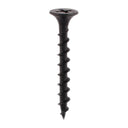
Dry-lining screws have a bugle head. This head shape countersinks cleanly into the board face. It does not tear the paper surface. A torn paper face weakens the fixing point and needs extra filling before finishing.
The thread type matters too. Coarse thread screws grip timber. Fine thread screws grip light-gauge metal. Self-drilling steel stud drywall screws cut through thicker steel. Each type is designed for a specific job. Do not swap one for another.
Three Collections in This Range
Each collection covers a different part of dry-lining work. Pick the right one for your job before you order.
Drywall Screws
Loose plasterboard screws for use with a drill driver. Coarse thread for timber studs and joists. Fine thread for light-gauge metal track. Bugle head on all types. Available in black phosphate and zinc-plated finishes. Trade packs of 1000 pieces.
Collated Drywall Screws
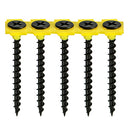
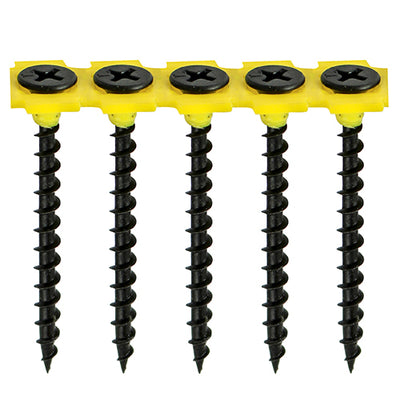
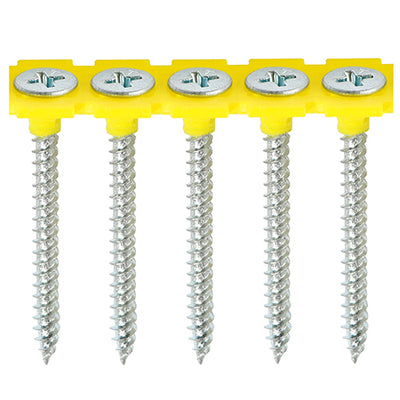
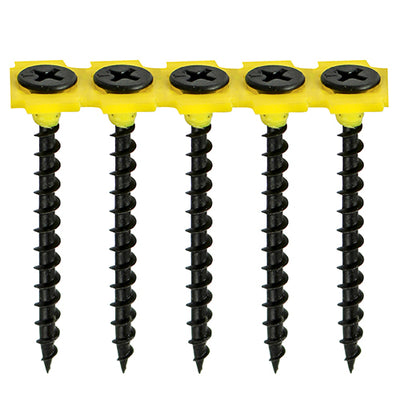
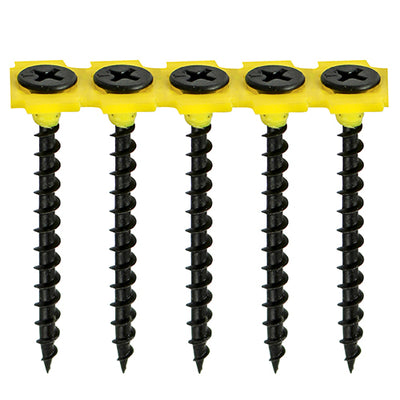
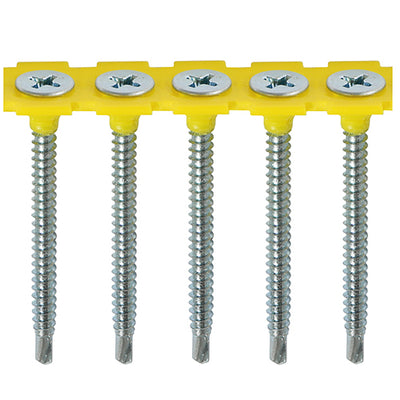
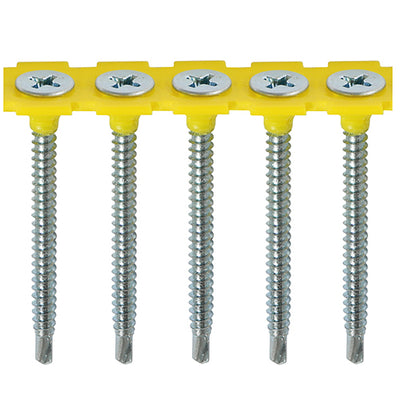
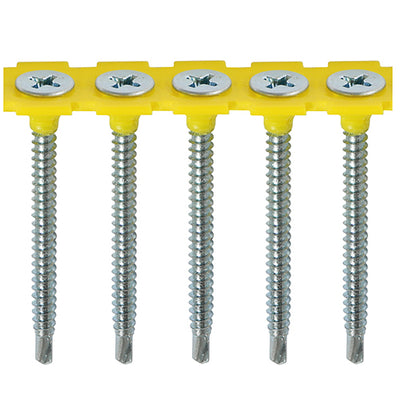
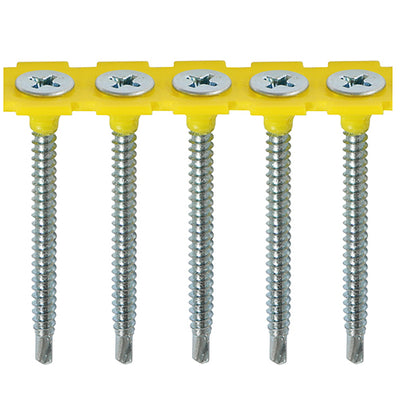
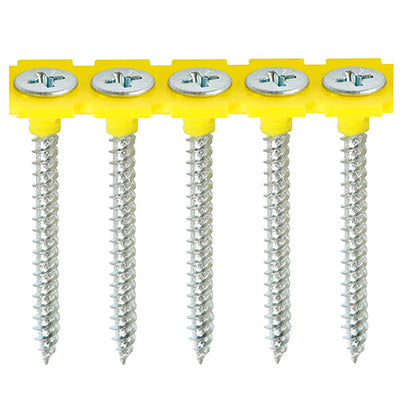
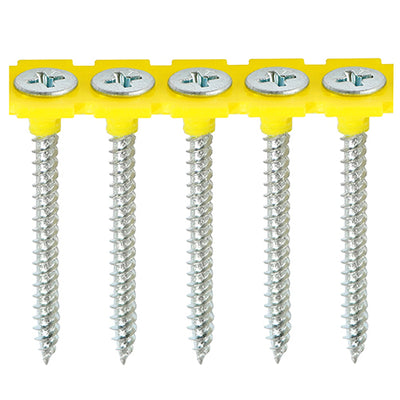
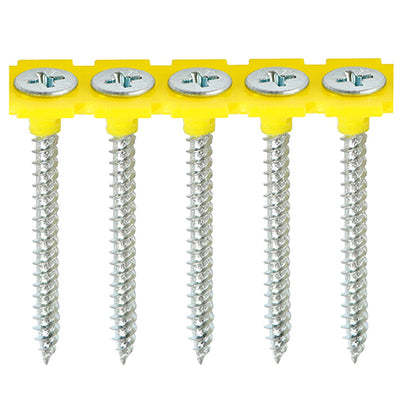
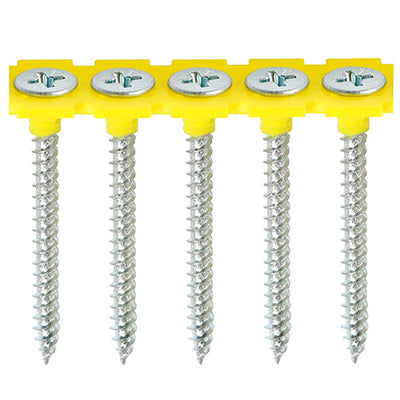
Strip-fed screws for auto-feed screw guns. Coarse thread, fine thread, and self-drilling options in stock. Standard 50-screw plastic strips. Compatible with Makita, DeWalt, Senco, and Hilti auto-feed systems. Speeds up boarding on large jobs significantly.
Metal Framing Screws
Wafer head self-drilling screws for steel frame assembly. Used to connect metal studs to metal track before boarding begins. Not for fixing plasterboard. Zinc-plated finish. Self-drilling tip cuts through light steel without a pilot hole.
Not Sure Which to Pick?
Start with your frame type. Timber frame needs coarse thread drywall screws. Light metal frame needs fine thread. Heavy steel stud framing needs self-drilling collated screws. Frame assembly before boarding needs metal framing screws. Use the guide further down this page.
Coarse Thread, Fine Thread, or Self-Drilling?
This is the most important choice in dry-lining. Get it right and the screw drives cleanly. Get it wrong and you strip the stud or lose grip on the board.
Coarse Thread
Wide thread pitch. Bites into softwood timber firmly. Pulls the board tight to the stud. Use for all plasterboard fixing to timber joists, noggins, and stud partitions. Available in loose and collated versions.
Fine Thread
Closely spaced threads. Designed for light-gauge metal framing up to 0.8mm. More contact points with thin steel means a secure grip without stripping. Use with light metal stud partitions and ceiling track systems.
Self-Drilling
Drill-point tip that cuts through steel as the screw is driven. No pilot hole needed. For heavier steel stud framing between 0.8mm and 2.5mm. Available as drywall collated screws in this range.
Rule to Remember
Timber needs coarse thread. Light metal up to 0.8mm needs fine thread. Heavier steel above 0.8mm needs a self-drilling point. Never use coarse thread on metal. It will spin and strip the track.
Quick check: Timber stud or joist? Use coarse thread. Light-gauge steel track? Use fine thread. Steel stud above 0.8mm? Use self-drilling. Steel to steel frame assembly? Use metal framing screws with a wafer head, not a bugle head.
Choosing the Right Screw Length
The screw must reach the stud or track. It needs at least 25mm of thread into the substrate beyond the board face. Too short and the fixing is weak. Too long and the point may break through a thin partition.
| Board Thickness | Substrate | Recommended Length | Thread Type |
|---|---|---|---|
| 9.5mm single layer | Timber stud | 3.5 x 32mm | Coarse thread |
| 12.5mm single layer | Timber stud or joist | 3.5 x 32mm or 38mm | Coarse thread |
| 15mm fireline or acoustic | Timber stud | 3.5 x 42mm | Coarse thread |
| 12.5mm plus 12.5mm double layer | Timber stud | 3.5 x 55mm | Coarse thread |
| 12.5mm single layer | Light metal track (up to 0.8mm) | 3.5 x 25mm or 35mm | Fine thread |
| 12.5mm single layer | Heavy steel stud (0.8mm to 2.5mm) | 3.5 x 35mm to 50mm | Self-drilling |
These lengths cover most standard UK dry-lining jobs. Always check the board manufacturer's guide for fire-rated or acoustic systems. Some rated assemblies specify a minimum fixings depth that differs from standard practice.
Head Types in This Range
Two head types are used across this range. Each head is shaped for a specific task.
Bugle Head
Used on all drywall screws and collated drywall screws. The curved underside of the head countersinks smoothly into the board face. It does not tear the paper. The head sits flush and slightly below the surface. Ready for jointing without extra preparation.
Wafer Head
Used on metal framing screws only. The flat, wide head clamps steel stud to steel track during frame assembly. Do not use a wafer head screw for plasterboard fixing. It will sit proud of the board surface and cannot be jointed over cleanly.
Screw Finishes Explained
The finish affects rust resistance and how jointing compound sticks to the head. Two finishes are available in this range.
Black Phosphate
Standard finish for indoor dry-lining. The porous surface lets jointing compound and plaster bond to the head. Reduces the risk of staining through the finish coat. For use in dry internal conditions only. Not suitable for damp or humid environments.
Zinc-Plated (Silver)
Better rust resistance than phosphate. Used on fine thread and self-drilling collated screws. Suitable for slightly damp internal areas such as ground-floor partitions. Also used on metal framing screws for light steel frame work.
Finish tip: Use black phosphate screws for standard internal plasterboard work. Switch to zinc-plated screws in any area with damp risk. Phosphate-coated screws should not be used in humid conditions as they can rust and bleed through the finish coat over time.
Why Use Drywall Collated Screws?
Loose screws slow you down on large boarding jobs. Picking up individual screws one at a time costs time on every single fixing. Over a full partition wall or ceiling, those seconds add up.
Drywall collated screws are loaded onto plastic strips. An auto-feed screw gun pulls each screw forward automatically. You keep both hands on the tool. Your boarding pace stays consistent from start to finish.
The bugle head still countersinks cleanly. The board face still comes out flat and ready for jointing. You just get there much faster.
Auto-Feed Tool Compatibility
Our collated strips are standard 50-screw plastic strips. They work with Makita, DeWalt, Senco, and Hilti auto-feed systems. Always confirm the strip format matches your screw gun model before ordering. An incorrect strip type can cause misfeed and magazine damage.
Setting the Right Depth
Set the depth stop on your screw gun so the bugle head creates a small clean dimple in the board face. The head should sit just below the paper surface. Do not drive it through the paper. A broken paper face reduces the strength of the fixing point.
Metal Framing Screws: Frame Assembly Before Boarding
Metal framing screws are for joining metal to metal. They connect floor track to head track. They fix metal studs into the track before any boarding begins. These are not plasterboard screws.
The wafer head sits flat against the steel surface. The self-drilling tip cuts through the track without a pilot hole. Most steel stud to track connections use a 3.5 x 9.5mm wafer head screw.
Do not use a drywall bugle head screw for frame assembly. The bugle profile will not clamp the steel sections together properly. Always use the correct wafer head metal framing screw for this task.
Browse the full metal framing screws collection for all available sizes and pack quantities.
Quick Reference Guide by Application
Use this table to find the right dry-lining screw for common UK site jobs.
| Application | Screw Type | Size | Finish |
|---|---|---|---|
| 12.5mm board to timber stud | Coarse thread, bugle head | 3.5 x 32mm or 38mm | Black phosphate |
| 15mm fireline board to timber | Coarse thread, bugle head | 3.5 x 42mm | Black phosphate |
| Double 12.5mm board to timber | Coarse thread, bugle head | 3.5 x 55mm | Black phosphate |
| Board to light metal track (up to 0.8mm) | Fine thread, bugle head | 3.5 x 25mm or 35mm | Zinc-plated |
| Board to heavy steel stud (0.8mm to 2.5mm) | Self-drilling, bugle head | 3.5 x 35mm to 50mm | Zinc-plated |
| Metal stud to metal track assembly | Wafer head, self-drilling | 3.5 x 9.5mm | Zinc-plated |
Frequently Asked Questions
1. What is the difference between drywall screws and metal framing screws?
Drywall screws have a bugle head. They fix plasterboard to a timber or metal frame. Metal framing screws have a wafer head. They join steel studs to steel track during frame assembly. They are used before boarding begins. Never use a bugle head screw for frame assembly, and never use a wafer head screw to fix plasterboard.
2. Can I use coarse thread drywall screws on steel studs?
No. Coarse thread screws are made for timber only. The wide thread pitch will not grip thin steel. The screw will spin in place and strip the track. Use fine thread screws for light-gauge steel up to 0.8mm. Use self-drilling steel stud drywall screws for heavier gauge steel above 0.8mm.
3. What size drywall screw do I need for 12.5mm plasterboard on a timber stud?
Use a 3.5 x 32mm or 3.5 x 38mm coarse thread screw. This gives at least 25mm of thread penetration into the stud, which is the minimum for a secure fixing. For 15mm fireline or acoustic board on timber, step up to a 3.5 x 42mm screw.
4. Are drywall collated screws compatible with all auto-feed guns?
Our collated drywall screws come on standard 50-screw plastic strips. These are compatible with most major auto-feed systems including Makita, DeWalt, Senco, and Hilti. Always check the strip format matches your specific gun model before ordering. Using an incompatible strip can damage the magazine.
5. When do I need self-drilling steel stud drywall screws?
When fixing plasterboard to steel stud framing above 0.8mm gauge. The drill-point tip cuts through the steel without a pilot hole. For standard light-gauge metal track up to 0.8mm, fine thread self-tapping screws are the correct choice. Self-drilling screws are available as collated drywall screws in this range.
6. What is a bugle head and why is it used for plasterboard?
A bugle head has a curved taper under the head. It countersinks into the board surface smoothly without tearing the paper face. The head sits just below the board surface and creates a small clean dimple. This is ready to joint over without extra filling. A standard countersunk head would cut through the paper and weaken the fixing point.
7. How many screws come in a pack and how fast is delivery?
All dry-lining screws in this range come in trade packs of 1000 pieces. All prices shown include VAT. Orders placed before 2 pm are dispatched for next-day delivery to UK addresses from our Hull warehouse.
Browse the Full Dry-Lining Range
This page covers all three dry-lining collections in one place. Each collection focuses on a specific fixing task.
For loose plasterboard screws to use with a standard drill driver, visit our drywall screws collection. For auto-feed gun work on larger boarding jobs, see our collated drywall screws. For steel stud to steel track frame connections, browse our metal framing screws.
Need screws for other construction tasks? See our full screws range for timber, metal, and specialist fixing collections.
Order Dry-Lining Screws with Next-Day UK Delivery
All dry-lining screws in this range are TIMCO products. All are in stock and available in 1000-piece trade packs. Prices include VAT. Order before 2 pm for next-day delivery from our UK warehouse in Hull.
Match the thread to your substrate. Set your screw gun depth correctly. Drive every head to a clean dimple below the board face. That is how you get dry-lining right, board after board.