3 products
Contact Adhesives
contact-adhesives
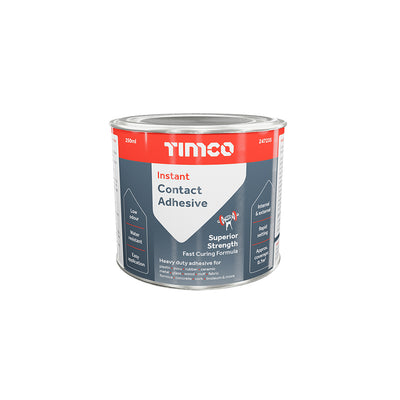
TIMCO Contact Adhesive, Rapid Setting Multi-Purpose Impact Resistant Adhesive - 250ml
- Pack quantity
- 1 Each
- Price
- £4.91Incl. VAT
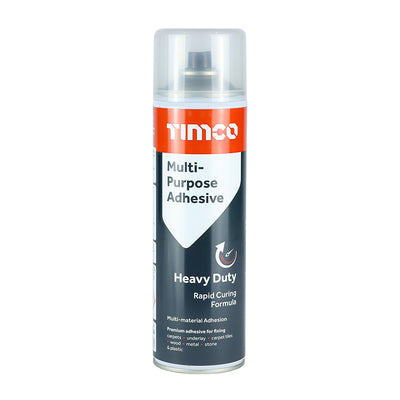
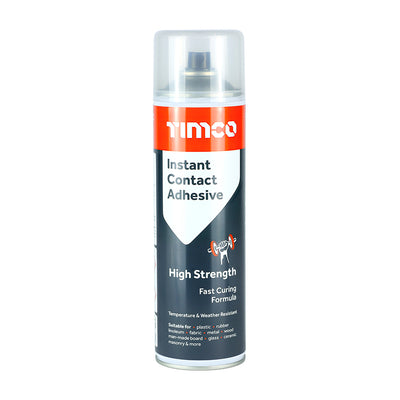
Contact Adhesives That Bond Fast and Hold Strong
Most glues make you wait. Contact adhesives do not. Apply to both surfaces, let them tack up, then press together. The bond forms instantly on contact. This range covers solvent-based and water-based contact adhesives. It includes multi purpose spray adhesive, water resistant adhesive, and brush-on formulas. Suitable for laminates, rubber, leather, foam, fabric, and more. All products are trusted by tradespeople and DIYers across the UK.
What Makes Contact Adhesive Different?
Standard PVA glue needs clamping and drying time. Contact adhesive works differently. You apply it to both surfaces you want to join. You let it become tacky, usually within a few minutes. Then you press the two surfaces together firmly. The bond is immediate and very strong.
This method suits jobs where clamping is not possible. It is ideal for large flat areas like worktops and panels. It is also perfect for curved surfaces and awkward shapes.
Contact adhesive is a flexible adhesive too. It stays slightly flexible once set. This makes it great for materials that move slightly, like rubber and foam.
Good to know: Contact adhesive creates a permanent bond. Position your surfaces carefully before pressing them together. Once they make contact, repositioning is very difficult.
Types of Contact Adhesive Available
Not all contact adhesives are the same. Different formulas suit different jobs and materials. Here is what you will find in this range.
Solvent-Based Contact Adhesive
This is the traditional formula used in trade for decades. It gives a very fast-tacking and strong permanent bond. Works well on laminates, rubber, leather, and most rigid substrates. Requires good ventilation during application. Fast drying and high initial grab make it popular on site.
Water-Based Contact Adhesive
A water resistant adhesive formula with lower solvent content. Better suited to indoor use where ventilation is limited. Still gives a strong bond on foam, fabric, and lightweight laminates. Easier to clean up before it sets. A good choice for upholstery and soft furnishing work.
Multi Purpose Spray Adhesive
Multi purpose spray adhesive covers large areas fast. It gives an even, thin coat with no brush marks. Ideal for bonding paper, card, fabric, and foam to rigid boards. Some spray formulas are repositionable for a short time after spraying. Great for signage, craft, and display work.
Heavy-Duty Contact Adhesive
Formulated for demanding bonding jobs in trade settings. Holds rubber flooring, conveyor belts, and thick laminates firmly. Resists heat, moisture, and vibration once cured. Used by flooring contractors and furniture manufacturers. Delivers a high-strength permanent bond on hard-to-glue surfaces.
Brush-On Contact Adhesive
Applied with a brush for precise, controlled coverage. Good for smaller jobs and detailed bonding work. Often comes in tins of various sizes. Suitable for shoe repair, bag repair, and leather bonding. Gives a neat finish with no overspray waste.
High-Temperature Contact Adhesive
Designed to hold in hot environments. Stays bonded where standard adhesives can soften or release. Used in engine bays, around boilers, and in industrial settings. Resists temperatures that would break down ordinary glue. Check the product data sheet for the rated temperature range.
What Materials Can Contact Adhesive Bond?
Contact adhesive bonds a wide range of materials. It is one of the most versatile adhesives in the trade toolkit.
| Material | Recommended Adhesive Type | Notes |
|---|---|---|
| Laminate to MDF or Chipboard | Solvent-based or heavy-duty contact adhesive | Apply to both surfaces. Allow to tack. Press firmly. |
| Rubber Flooring | Heavy-duty contact adhesive | Ensure subfloor is clean, dry, and flat. |
| Foam and Upholstery | Water-based contact adhesive or spray | Use low-pressure spray for even coverage on foam. |
| Leather and Fabric | Brush-on or water-based contact adhesive | Test on a small area first. Some dyes may react. |
| Paper, Card, and Printed Media | Multi purpose spray adhesive | Use repositionable spray for easy alignment. |
| Metal to Rubber | Solvent-based heavy-duty contact adhesive | Degrease metal before applying adhesive. |
| Shoe and Boot Repair | Brush-on contact adhesive | Press firmly and leave under weight to cure fully. |
Quick tip: Contact adhesive does not bond well to polyethylene or polypropylene. These plastics need a specialist primer first. Always check your product data sheet for approved substrates before starting your job.
How to Use Contact Adhesive Correctly
Using contact adhesive correctly gives you the best bond. Follow these steps every time for a reliable result.
Step 1: Prepare Both Surfaces
Clean both surfaces before applying any adhesive. Remove dust, grease, oil, and old adhesive residue. Surfaces must be dry. Damp surfaces reduce bond strength significantly. Lightly sand smooth or glossy surfaces to help adhesion.
Step 2: Apply to Both Surfaces
Apply a thin, even coat of contact adhesive to both parts. Use a brush, roller, or spray depending on your product type. Cover all edges and corners to avoid lifting later. Thin coats work better than thick ones. Thick coats can trap solvent.
Step 3: Allow the Tack Time
Leave both coated surfaces to become tacky before joining. This usually takes 5 to 15 minutes depending on temperature. Do not rush this step. The adhesive must feel dry to the touch. Test by touching lightly with your knuckle, not your fingertip.
Step 4: Press Firmly Together
Line up your surfaces carefully before making contact. Press them together firmly and evenly from one end to the other. Use a rubber roller or a block of wood to apply even pressure. Work out any air bubbles as you go.
Step 5: Allow Full Cure Time
The bond is strong immediately after pressing. But full cure takes longer, usually 24 to 72 hours. Avoid stressing the joint during this period. Warmth speeds up curing. Cold temperatures slow it down.
Safety and Ventilation
Solvent-based contact adhesives produce strong fumes. Always work in a well-ventilated space. Open windows and doors. Use a fan if needed. Wear nitrile gloves and avoid skin contact. Keep away from flames and sparks. Some formulas are flammable.
Spray Adhesive vs Brush-On Contact Adhesive
Both types of contact adhesive bond well. The right one depends on your job size and surface type.
Multi purpose spray adhesive covers large areas quickly. It gives a very even, thin coat with no streaks. It is ideal for foam, fabric, and flat panels. Some spray formulas allow brief repositioning before the bond sets fully. However, overspray can be messy in small spaces. Always mask nearby surfaces when spraying.
Brush-on contact adhesive gives you more control. You can apply it precisely to edges, corners, and small patches. It produces less waste and no overspray. It is the better choice for repair work and small surface areas. Tin sizes range from small for repairs to large for trade volume work.
For very large areas like full worktops or rubber flooring sheets, spray saves time. For detailed work like shoe repair or trim bonding, brush-on is cleaner and easier to control.
Water Resistant Adhesive for Damp and Outdoor Use
Not all contact adhesives handle moisture well. If your bonded joint will face water, you need a water resistant adhesive.
Standard contact adhesives can soften or fail in wet conditions. Water resistant formulas are designed to stay bonded even when damp. They are suited to kitchen worktops, bathroom splashbacks, and outdoor signage.
Always check the product label for water resistance ratings. Some are water resistant but not fully waterproof. If the joint will be submerged or face heavy rain, confirm the product is rated for that.
Trade note: For kitchen worktop laminate bonding in the UK, always use a water resistant contact adhesive near sinks and hobs. Heat and steam can weaken standard formulas over time. A water resistant formula gives a far longer-lasting result.
Find the Right Contact Adhesive for Your Job
Use the filters above to narrow down by adhesive type, format, and brand. Check individual product pages for open time, cure time, and substrate compatibility before ordering.
Whether you need a heavy-duty brush-on formula for laminate fitting, a multi purpose spray adhesive for foam and fabric, or a water resistant adhesive for kitchens and wet rooms, this range covers the most widely used contact adhesives for trade and DIY across the UK. For bonding sealants and gap fillers, also see our sealants and adhesives range.
Frequently Asked Questions
What is contact adhesive used for?
Contact adhesive is used to permanently bond two surfaces together. Common uses include laminate fitting, rubber flooring, leather repair, foam bonding, and shoe repair. It works on most porous and semi-porous materials.
How long does contact adhesive take to dry before pressing?
Most contact adhesives need 5 to 15 minutes of open time before pressing. The surface should feel dry but still tacky when you touch it lightly. Follow the product label for exact tack time. Temperature affects drying speed.
Is contact adhesive waterproof?
Standard contact adhesive is not fully waterproof. However, many formulas are water resistant. For wet areas like kitchens and bathrooms, use a product labelled as water resistant adhesive. Check the data sheet for exact moisture ratings.
Can you use contact adhesive on foam?
Yes. Water-based contact adhesive and multi purpose spray adhesive both work well on foam. Use a light, even coat to avoid soaking the foam. Solvent-based formulas can dissolve some types of foam, so always test first.
What is the difference between solvent-based and water-based contact adhesive?
Solvent-based contact adhesive bonds faster and grips harder substrates better. Water-based contact adhesive has lower fumes and is safer for enclosed spaces. Both types give strong permanent bonds when applied correctly. Solvent-based is generally stronger for heavy-duty trade use.
Can contact adhesive be used outdoors?
Some contact adhesives are rated for outdoor use. Look for products described as water resistant adhesive or weatherproof formula. Standard formulas are best kept for indoor applications only. Always read the product label to confirm suitability.
How do you remove contact adhesive if you make a mistake?
Fresh contact adhesive can be removed with an appropriate solvent, such as acetone or specialist adhesive remover. Once fully cured, removal is very difficult without damaging the surface. This is why careful positioning before pressing is so important.
Related Adhesives and Fixings
Contact adhesives are often used alongside other bonding products. For gap filling and sealing around bonded joints, see our sealants and adhesives range.
For mechanical fastening to back up adhesive bonds on heavier items, visit our wood screws range.